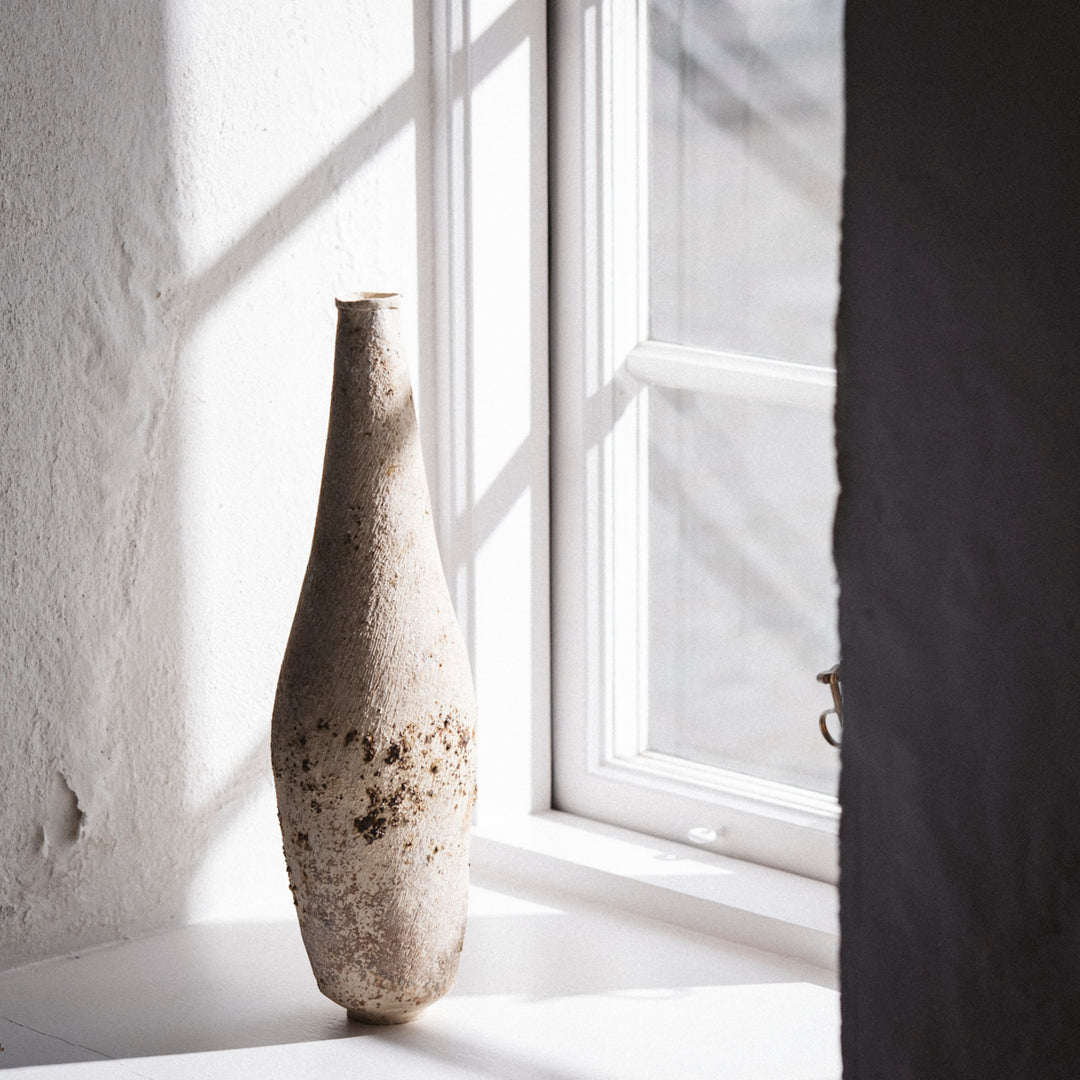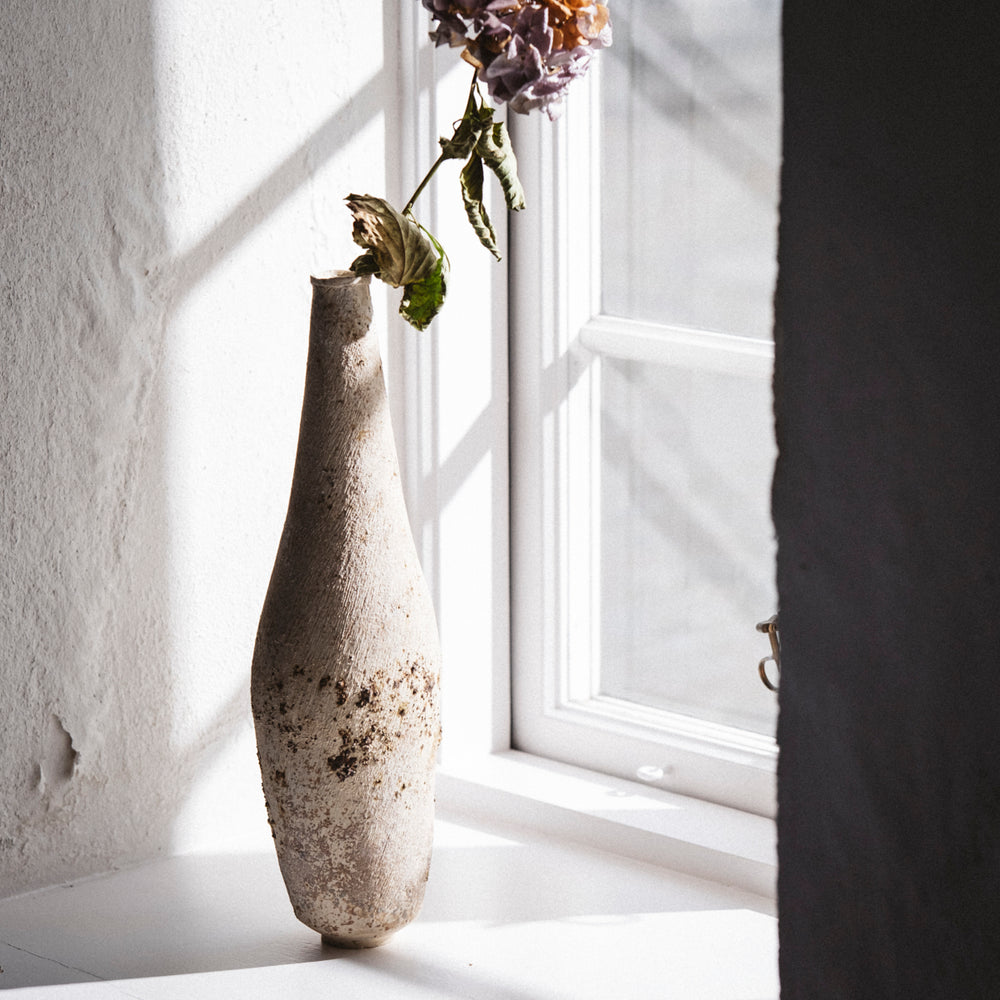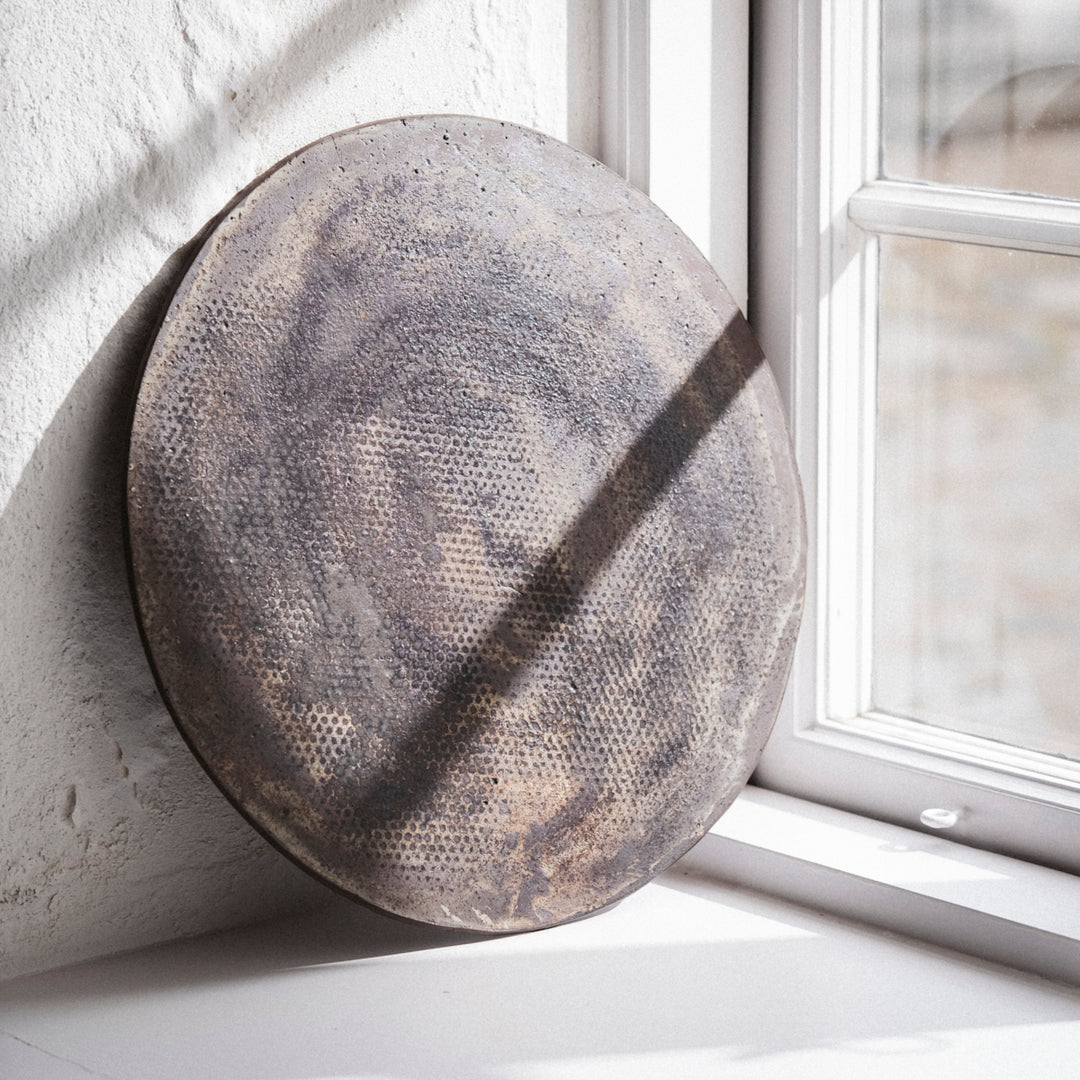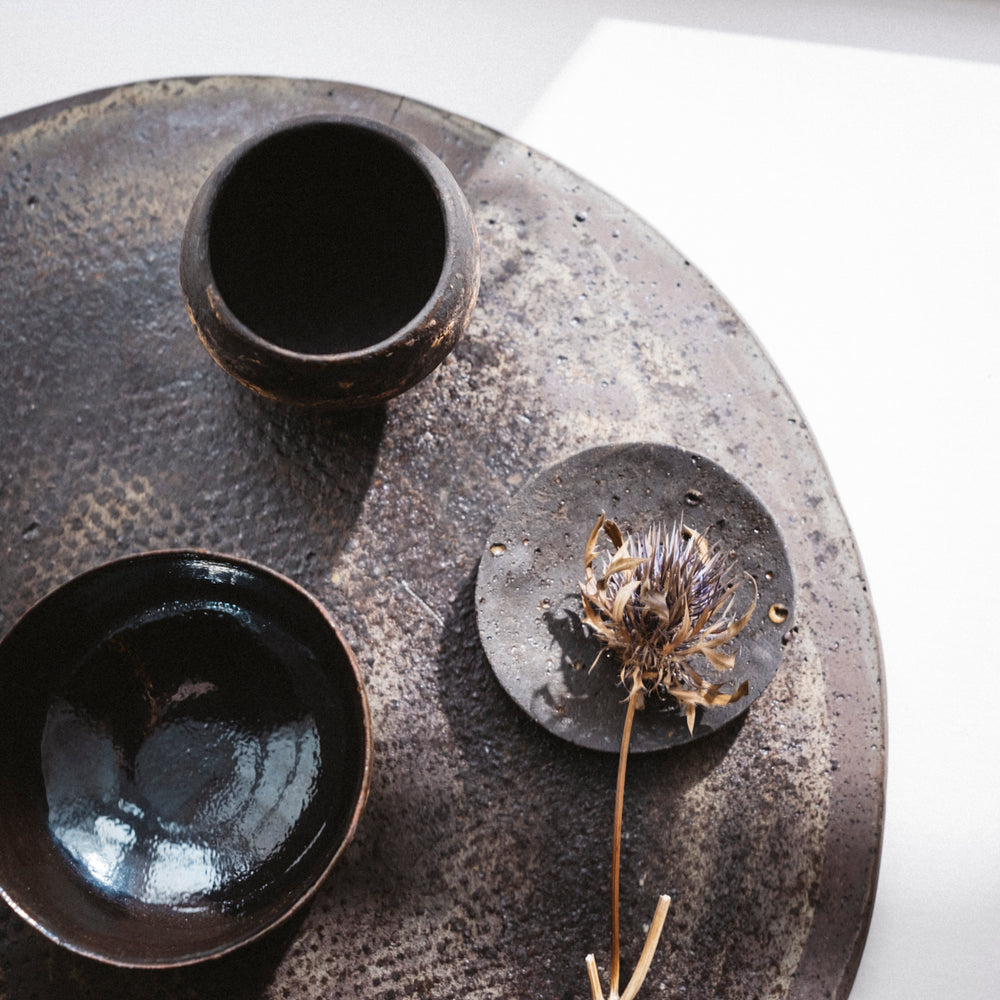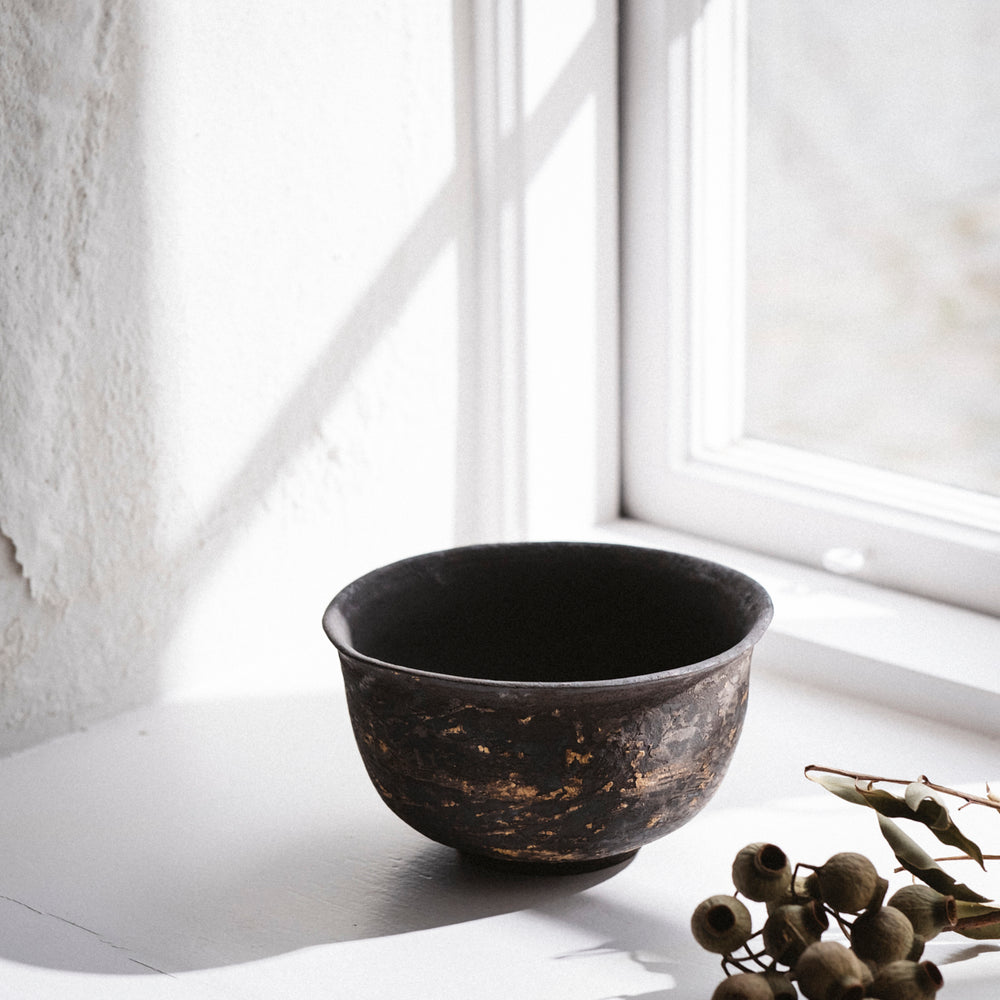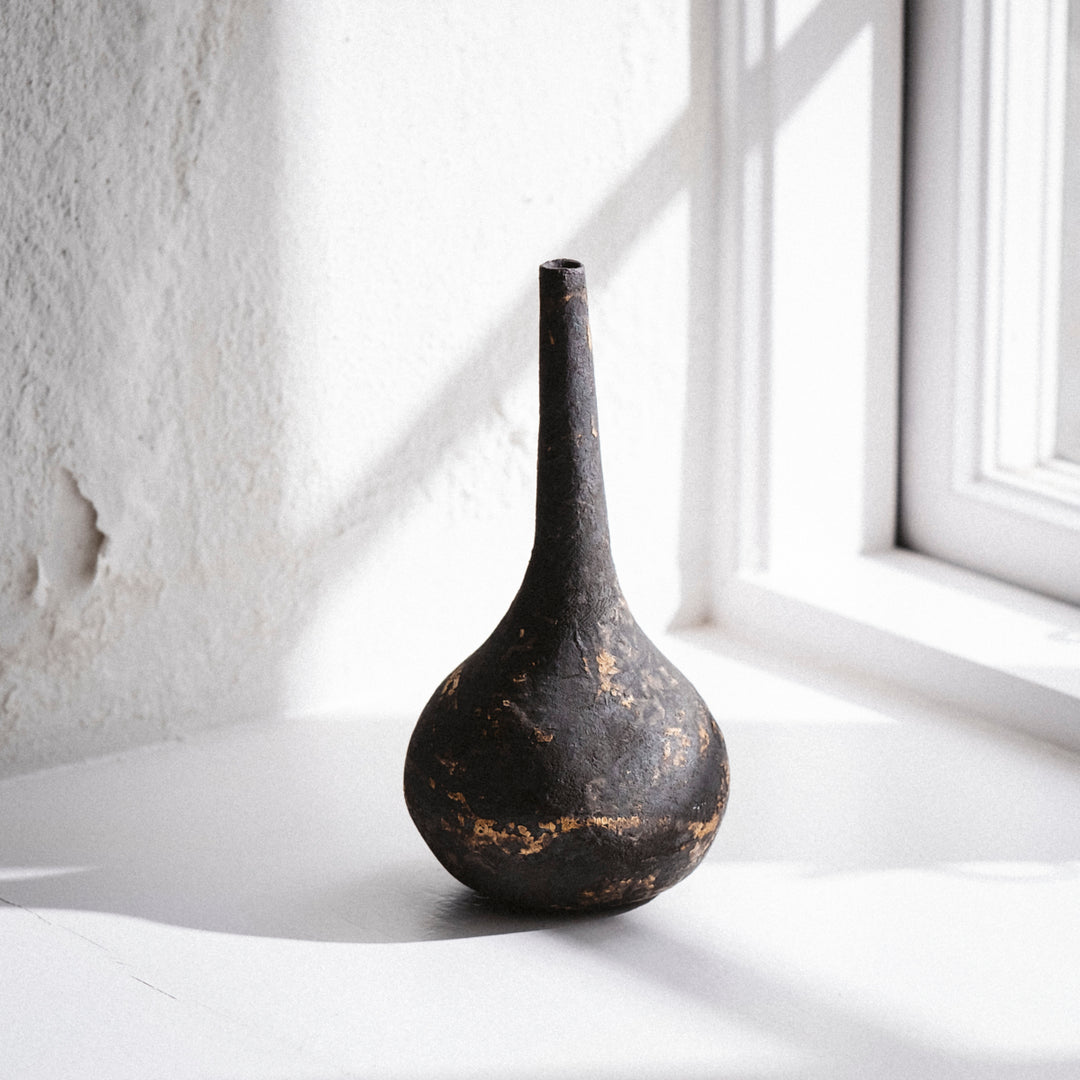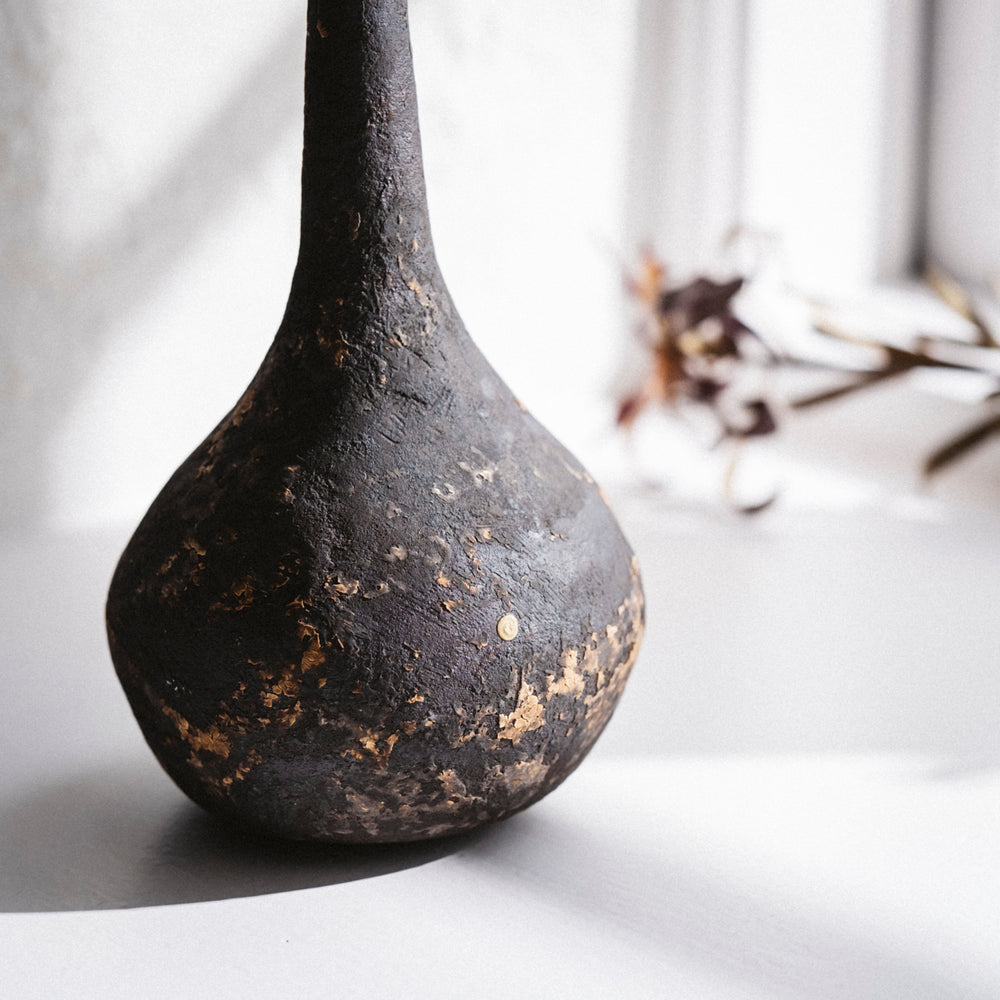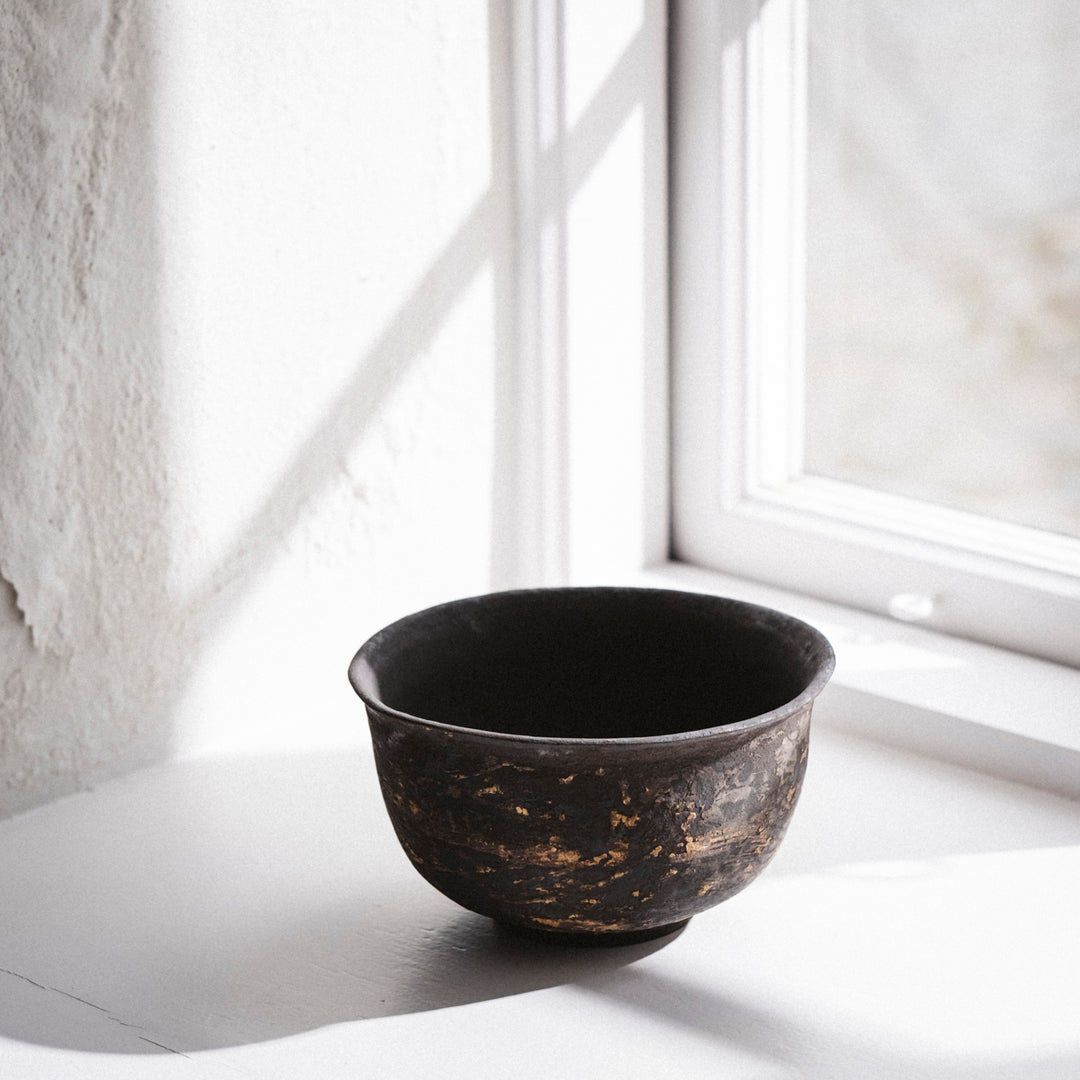


About the object: This bowl made of black stoneware clay, created using a build-up technique, is approx. 10cm high and has a diameter of approx. 18cm. It is part of Dietlind's long-term project "Traces" and belongs to her series "Tegula" (lat., brick) from 2024. In her search for traces, Dietlind discovers rocks and materials that, when ground to dust, become part of the object's surface. For the Tegula series, Dietlind gained access to excavation sites in the Beckergrube on Lübeck's Old Town Island through her collaboration with the Department of Archaeology and Monument Preservation in Lübeck. There she found bricks, floor tiles, street dirt and clay from the 16th century, ground them up at great expense and then applied them to everyday objects. Through the firing process, these traces of the past create visible and tactile surfaces that merge inseparably with the object of the present.
The materials used for the surfaces of the object are food-safe and waterproof. The object can therefore be used in a variety of ways. Or simply delight your senses.
Each object in the Tegula series is unique in its shape and surface and comes with a printed certificate. The document contains information about the product and the materials used and was created by Dietlind Wolf herself. Furthermore, samples of the ground historical material are part of the work and are delivered together with the object.
Manufacturing process: This work is made of black stoneware clay using the body-building technique and was pre-fired at 960° in an electric kiln. The outer surface was partially covered with engobe made of black stoneware clay before biscuit firing. The glazes were developed in-house from clay finds and material provided by the Lübeck Department of Archaeology and Monument Conservation from Dietlind excavation sites. Inside: Glaze #5: Lübeck, Beckergrube 29, tile no. 3, ca. 16th century. Outside: Glaze #1: Lübeck, Beckergrube 29, street dirt, ca. 16th century. Glaze #2: Lübeck, Beckergrube 19, clay find, ca. 16th century. The vessel was fired at 1250° C in an electric kiln. All surfaces that are not glazed were coated with liquid quartz (Sio2). They are food-safe and waterproof.
We offer reliable shipping for our products to various destinations. Here are our shipping options:
Germany:
EU countries:
Switzerland: Information regarding transportation costs to Switzerland can be found here.
Please note that the stated delivery times are estimates and may vary depending on the destination and current circumstances. We are always working to get your orders to you as quickly as possible.
For further information or special inquiries about shipping, please do not hesitate to contact us. to contact. We are happy to answer your questions.
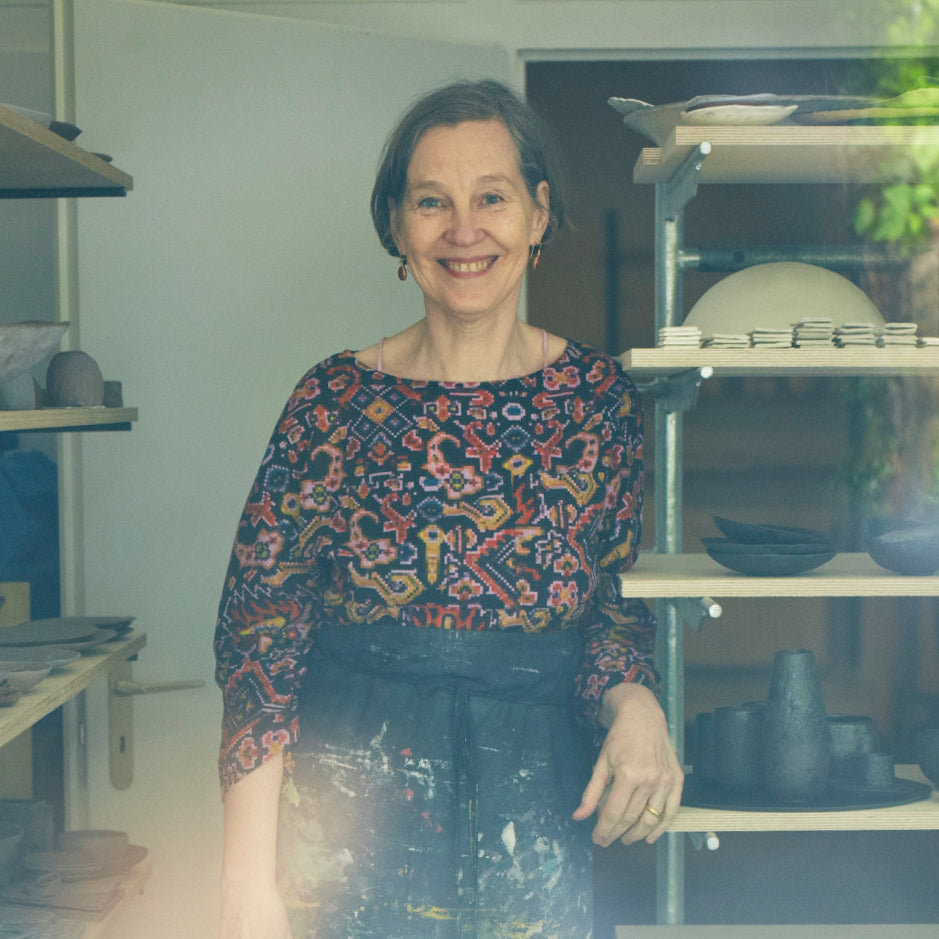
Dietlind Wolf is a versatile artist whose curiosity about life leads her on a constant search for traces of materiality.
After studying visual communication at Aachen University of Applied Sciences, where she graduated with an award for outstanding achievement, she worked for renowned brands as a textile designer in haute couture in Italy and Switzerland. In the 1990s, she began her freelance career as a textile designer and as a stylist for still life and food photography for international magazines.
In 2004, Dietlind Wolf began designing and producing her own earthenware and porcelain vessels for her photographic works. This marked the beginning of an experimental artistic development in which she explores traces of material history in sand, clay, earth and stone.
Her biographical path explains the influences and interconnections of various artistic disciplines in her work. With a keen sense of materiality and color, she develops independent concepts and implements unusual ideas in unmistakable form. Her clay vessels gain a special atmospheric density through the deliberate use of materials and invite people to embark on their own search for traces with all their senses.
A subtle irony occasionally creeps in. Medieval street dirt from the archaeological excavations in Lübeck's Beckergrube shows up on the surfaces of the vessels after firing as fine golden speckles that make us think about history, value and perception.